


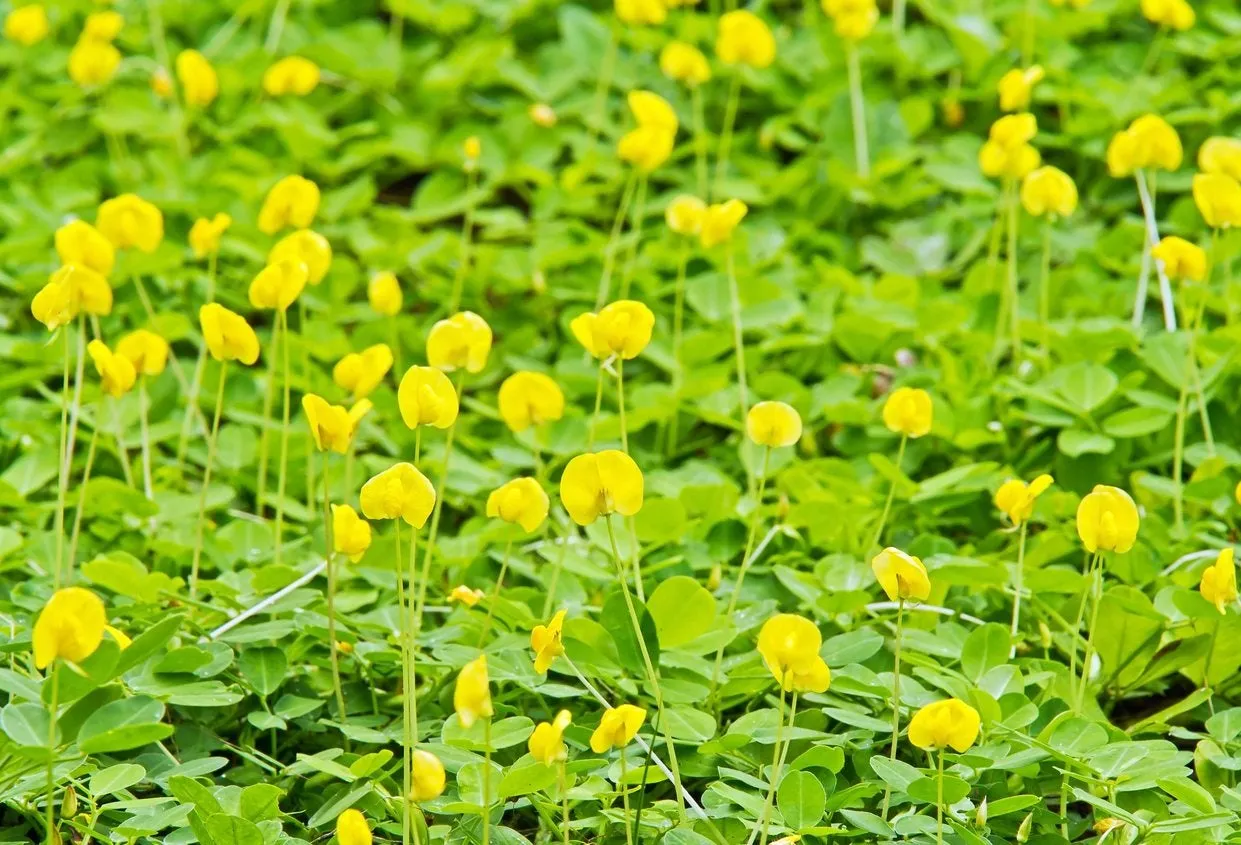
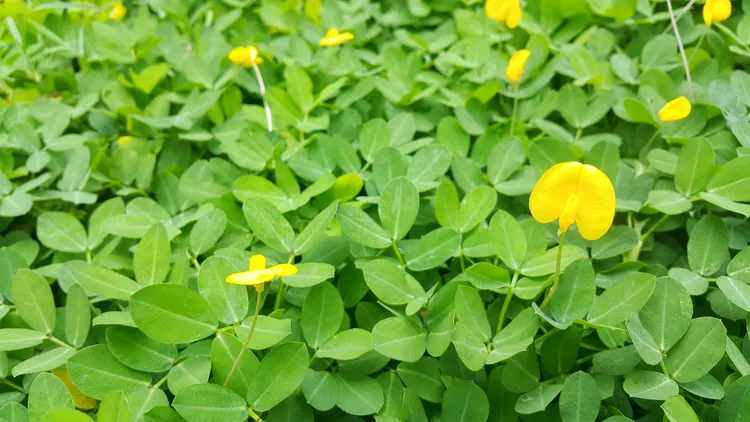
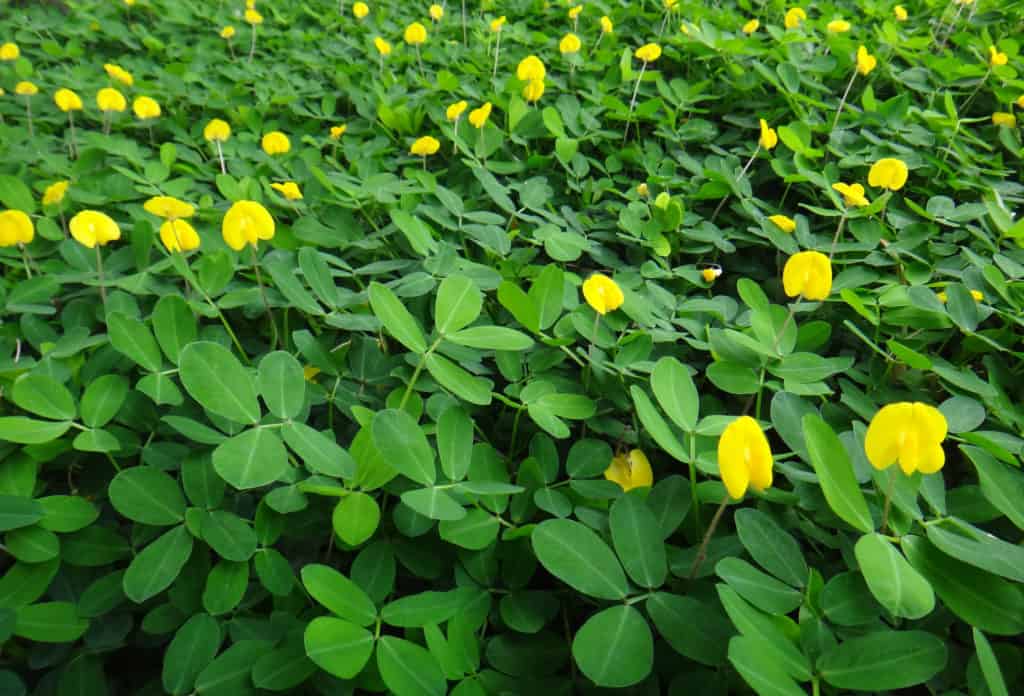
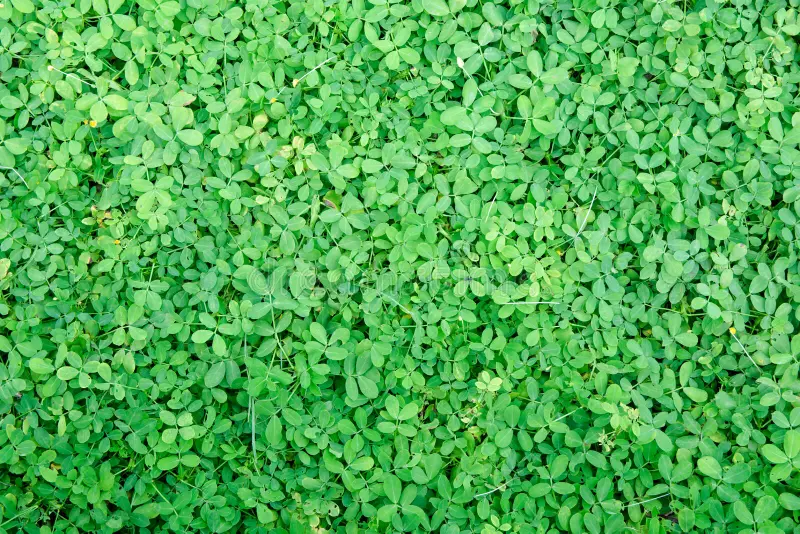


Perennial Peanut is a tropical plant, It grows low and firmly clasped to the soil where it acts as a living mulch. It forms lawn-like mats impenetrable by weeds, even in climates suited for tropical rainforests. It grows in impoverished soils, fixes nitrogen, and is highly resistant to compaction.
Perennial Peanut is useful for controlling weedy vegetation in gardens, orchards, and areas with non-agricultural uses. Since it is resistant to compaction, it makes it an attractive option for areas with a high incidence of human traffic. This includes footpaths, near homes, around the fire pit, or in picnic/recreation areas. It is also great for use in areas with livestock and is relatively resistant to chickens.
Perennial Peanut also grows quickly, produces biomass, and serves as an excellent forage. While it is not super deep-rooted, it is suitable for erosion control under some contexts. If you live in tropical or sub-tropical climates, peanut grass is a great low-maintenance alternative to regularly weed-whacking or maintaining a lawn.
Peanut Grass is easy to cultivate and requires little maintenance. It is incredibly hardy, growing in soils that are infertile, acidic, and that experience water-logging. It is also drought-tolerant. While it might dry out during a dry period, it quickly comes back after some rain.
It grows best in the tropics from the hot lowlands to the montane up to 4000 feet in elevation. It does best in areas with at least 40 inches (1000 mm) of rainfall per year. Peanut grass does not typically do well in areas with frost, although it will tolerate it. Peanut Grass does well in full sun but is also shade tolerant.
- Botanical name: Arachis Glabrata
- Origin: South America, Argentina,Brazil and Paraguay.
- Flowering date: All Year
- Sun Exposure: Full Sun
- Height: 6 – 18 inches.
Planting Instructions:
- Prepare your planting area by removing weeds and any vegetation. The more thorough you do this the better chance your patch will establish without problems.
- With a small hand shovel or spade simply open up the soil to where you can place the cuttings. Four or five inches deep (10-12 cm) per cutting is sufficient.
- Space cuttings 6 to 10 inches (15-25 cm) apart. The closer together the faster your patch will establish.
- You can apply a fine mulch of well cut hay or sawdust to help retain moisture and reduce erosion.
- Make sure your plants do not dry out while establishing. Water if necessary.
- After about 2-4 months your patch should be well established,
Consult for shipping service
Maintenance and Care:
- Weeding – While Peanut Grass does a pretty good job at preventing the growth of weeds occasionally some may poke through. This is especially true as the patch is established.
- Watering – Peanut Grass will dry out during the dry season but will come back once the rains arrive. You can water to maintain the green-lush color.
- Cutting – Peanut Grass doesn’t require much cutting back. It grows pretty low to the ground and is marvelous at remaining tame. Over time certain varieties may get slightly bushy and they can be cut back with a weedwhacker or even mowed.
- Disease – Certainly Peanut Grass is susceptible to diseases or pests but this is rarely a problem. This species tends to be rather vigorous and weedy, so even large patches of this species rarely have even minor issues.
- Removal – It can be difficult to eradicate peanut grass once established. The easiest method for this is to remove as much of it as possible then cover with thick mulch. Replace with fast growing plants that can shade out and compete with the peanut grass.

Reviews
There are no reviews yet.