


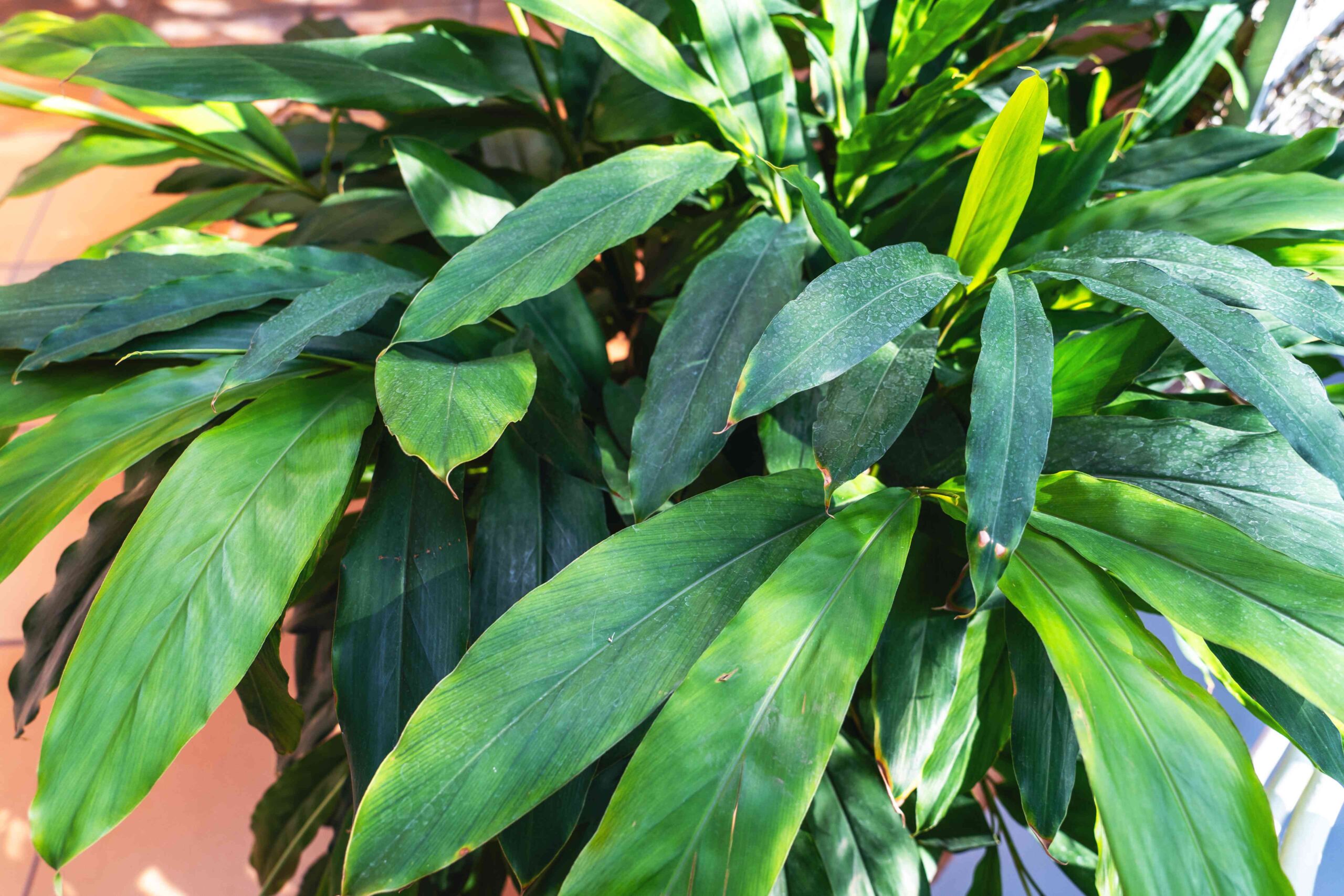
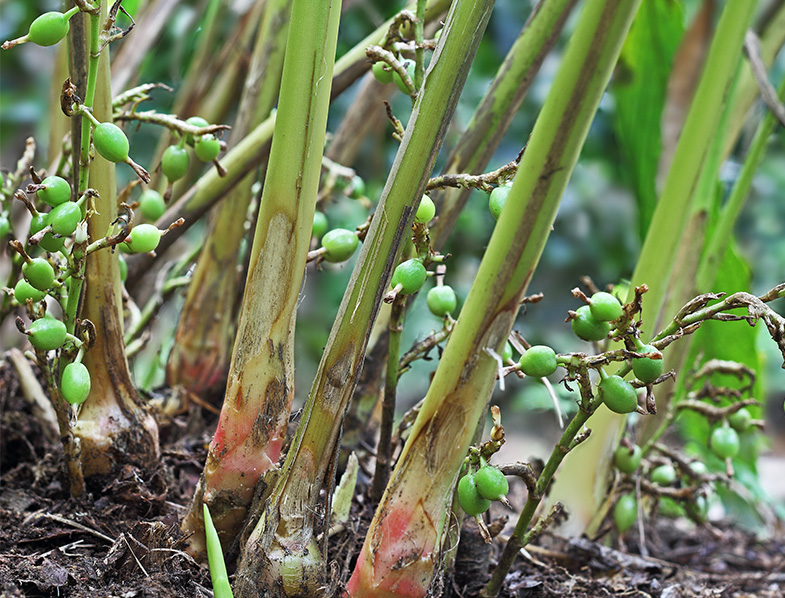
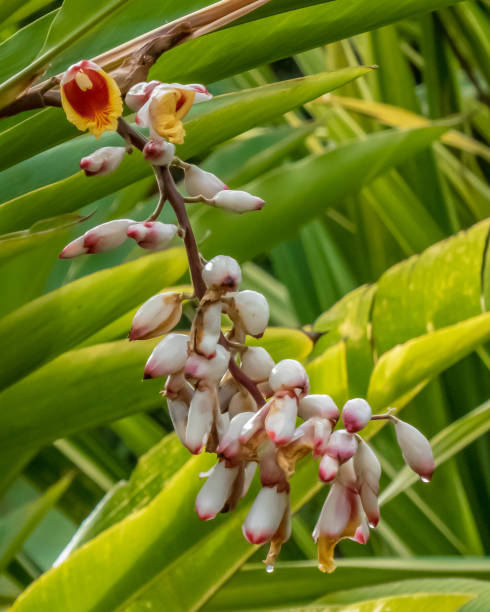
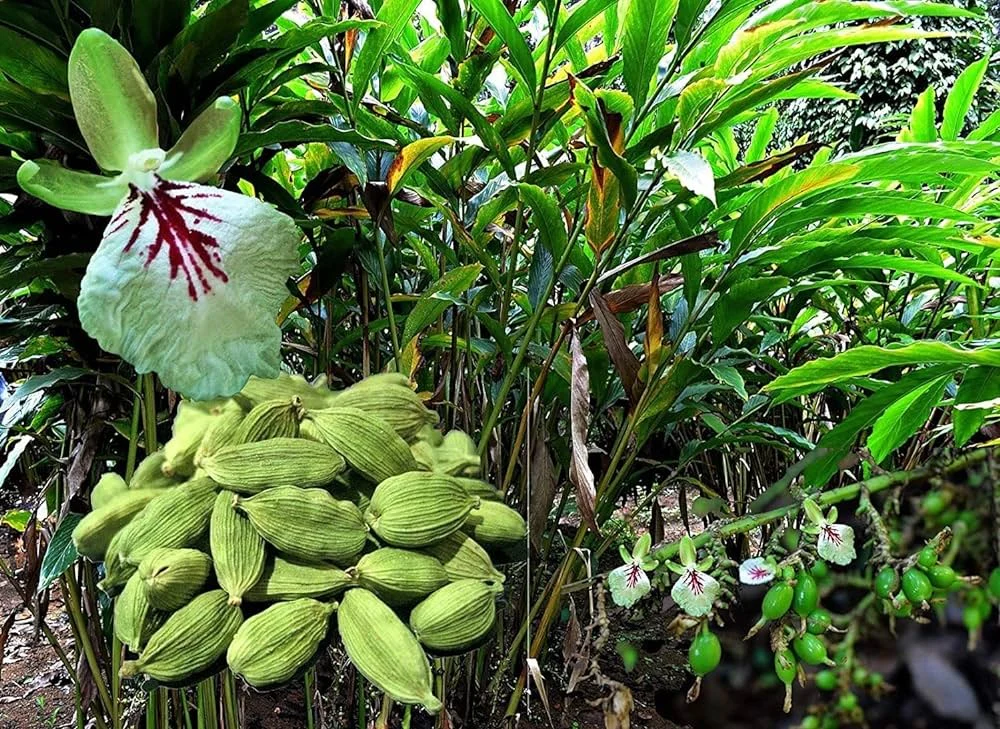


The perennial herb is native to tropical regions, where it grows across the Middle East, India, and Asia. Cardamom is actually a spice originating from the genus Elettaria and Amomum seeds in the Zingiberaceae family.
The plants produce small, thin seed pods with a paper-like shell and a triangular cross-section. Harvesting, drying, and crushing the seeds gets you the spice cardamom.
Cardamom comes in two distinct varieties – black or green cardamom. Green is the more common cultivar, with the black variety having a bleached appearance. The E. cardamomum grows to heights of five to ten feet, and you’ll find it growing in partial shade conditions in the wild.
The cardamom prefers growing in forest settings, South Florida and Hawaii present the best growing climate in the US for cardamom. The plant grows in a clumping fashion, producing rigid, erect stems with leaves that reach lengths of up to two feet.
The plant dies back in the winter and returns the following growing season. All it takes is a few active rhizomes for the plant to regenerate.
It’s critical that gardeners place the plant in a spot in the flowerbed, receiving partial sunlight. The plant prefers growing in the shade of tall trees, and it won’t do well in the full sun.
Soil
Cardamom likes growing in loose, airy, nutrient-dense soils. Therefore, you’re probably going to have to amend the soil with some compost and peat moss before planting.
Typically, the cardamom does well in soils that have a pH of between 6 to 6.8. However, the cardamom can tolerate acidic soils down to as low as 6 to 5.5 pH.
Watering
In its native rainforest habitat, the cardamom receives rainfall for around 200 days a year. Therefore, gardeners need to keep the soil consistently moist throughout the growing season.
We recommend adding a layer of mulch or bark chips around the base of the plant to reduce evaporation during the summer. The plant needs less water in the winter and more water in the summer. However, avoid waterlogging the soil.
Fertilizer
We recommend feeding your cardamom an organic fertilizer formula that’s high in phosphorous. Use a liquid formula for indoor plants and a granular formula for the flowerbeds.
Reviews
There are no reviews yet.