


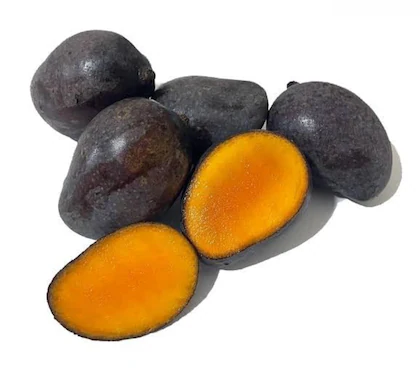


The Kasturi mango (Mangifera casturi) is a tropical fruit tree that grows 10–30 meters tall and is endemic to a small area around Banjarmasin in Southern Borneo, Indonesia.
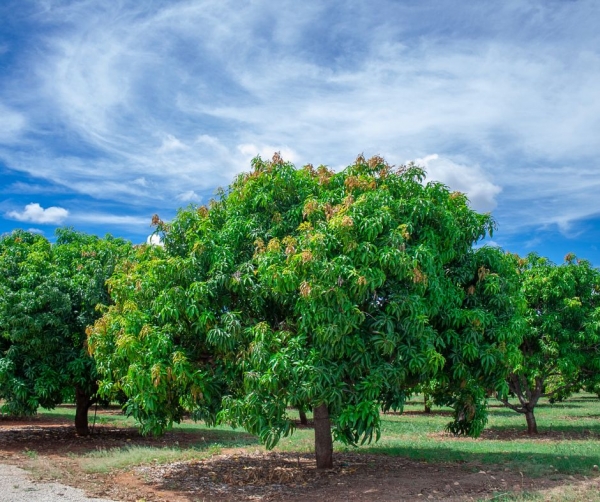
Tree Appearance: The Kasturi mango tree is medium to large-sized, with a dense and spreading canopy. It has a rounded or oval shape and can reach a height of around 30 to 40 feet when fully matured.
Leaves: The leaves of the Kasturi mango tree are evergreen, alternate, and oblong-shaped. They are glossy, dark green on the upper surface, and pale green on the lower surface.
Flowers: The tree produces small, fragrant, and white to pale yellow flowers in clusters known as inflorescences. These flowers have a pleasant aroma and attract pollinators like bees, butterflies, and other insects.
Ripening Season: Kasturi mangoes are known as “early” season mangoes, and their harvest typically starts in April and extends to June or July, depending on the region and climate.
Cultivation: The Kasturi mango tree thrives in tropical and subtropical climates. It requires well-drained soil and plenty of sunlight for optimal growth. Proper care, including regular watering and protection from pests and diseases, is essential for healthy fruit production.
Fruit Description:
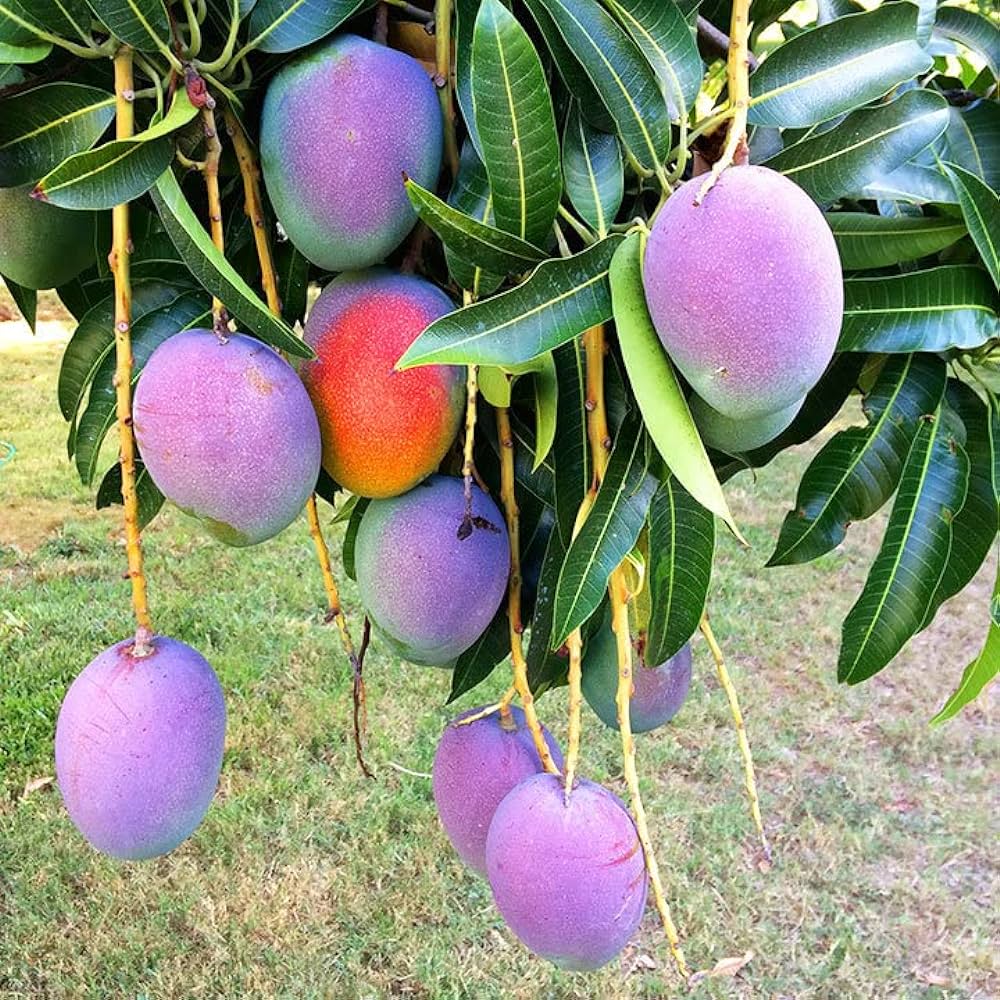
- The Kasturi mango fruits are smaller than ordinary mangoes, weighing less than 80 grams.
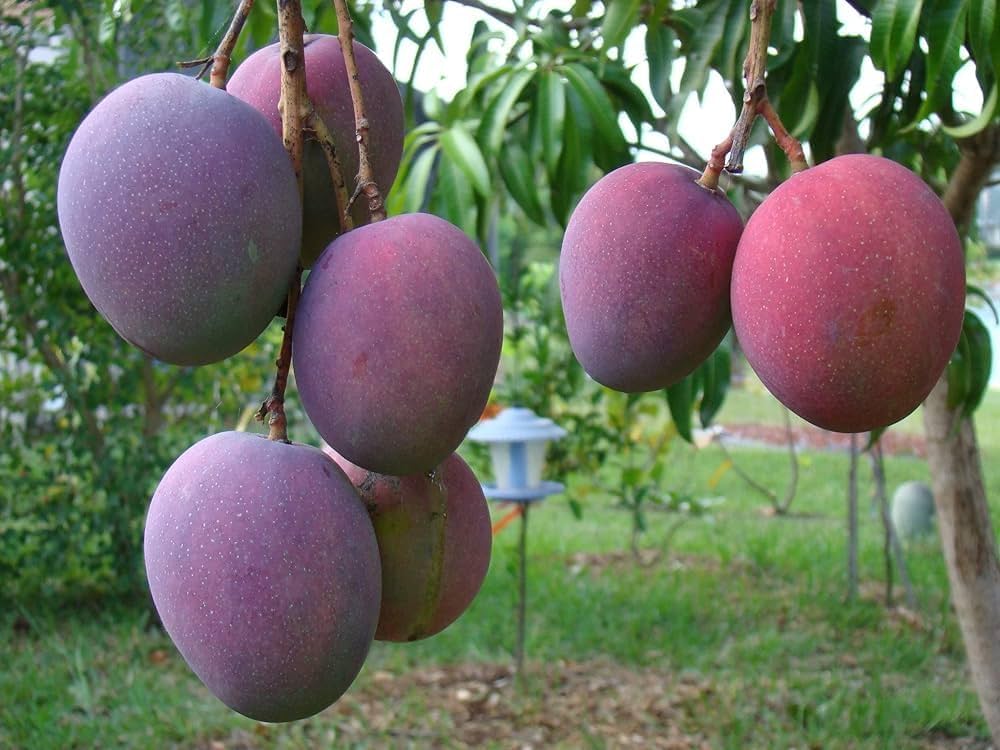
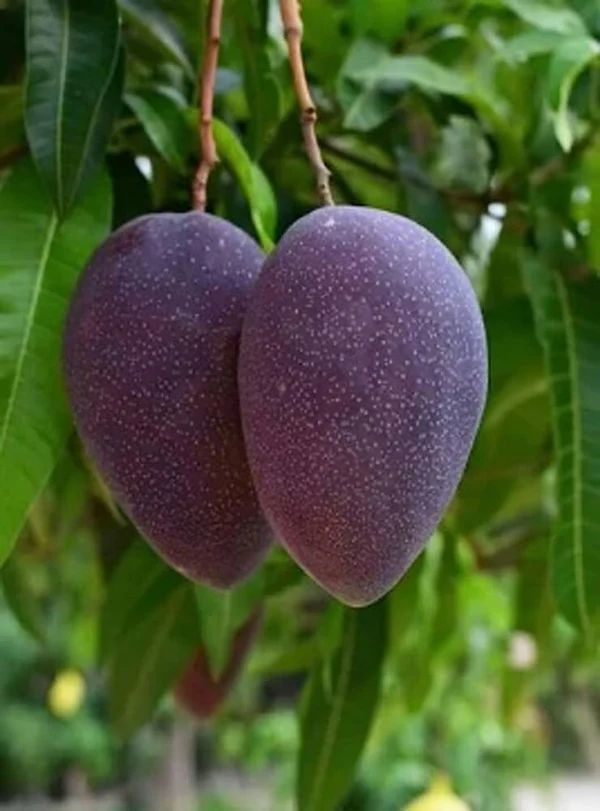
- They have an oval shape and thin green skin speckled with black or maroon dots.
- When ripe, the color changes to brown or purple-black, and the surface becomes shiny.
- The flesh is orange in color and has a stringy texture with a unique sweet fragrance.
- Compared to the common mango (Mangifera indica), the Kasturi tastes less sweet but has a stronger flavor and softer aroma.
- Kasturi mangoes are primarily consumed fresh, with their skin peeled and seed removed. Although there is a high demand for the fresh fruits, they are also used to make jellies, nectars, syrups, and chutneys, albeit less frequently. The pulp blends well with other fruits in tropical salads or can be pureed for smoothies and juices. It also enhances sweet dishes like cheesecakes, tarts, sorbets, ice creams, puddings, mousses, and lassis. Kasturi mangoes are a flavorful addition to various baked goods. They pair well with ingredients such as coconut, lemon, lime, ginger, mint, chili, cilantro, vanilla, cardamom, yogurt, and rice. Kasturi mangoes can be stored for up to a week in the refrigerator or a cool, dry place.
Kasturi mangoes originate from the Indonesian region of South Borneo, known locally as Kalimantan, where they are primarily grown in the southern region. Cultivated by the local Banjar people, Kasturi mangoes are best suited to tropical and subtropical climates which provide the warm temperatures and high humidity necessary for their growth. Unlike most mango varieties, Kasturi mangoes are not commercially cultivated on a large scale; instead, they are typically grown for personal use or by small-scale farms. Although Kasturi mangoes are rare and have become extinct in the wild, their appealing flavor continues to drive commercial cultivation and growing interest in some non-native regions. Today, Kasturi mangoes continue to be cultivated by home growers and small farms within Indonesia, and can also be found in specialty stores, farmers markets, and tropical fruit farms in southern Florida and the Caribbean.

Reviews
There are no reviews yet.