






The Star Apple, scientifically known as Chrysophyllum cainito, is a tropical fruit tree native to the Caribbean and Central America. Here’s a comprehensive description of the Star Apple plant:
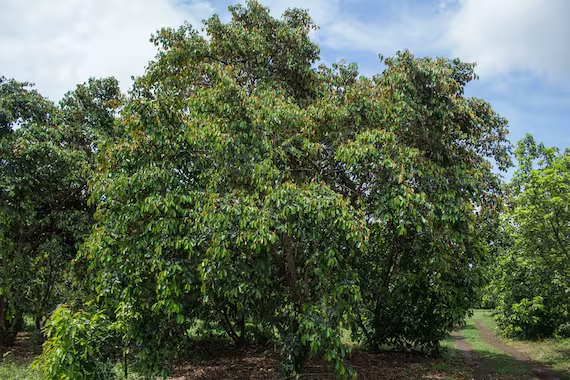
Appearance: The Star Apple tree is a medium-sized evergreen tree that can grow up to 20-60 feet tall, depending on the variety and growing conditions. It has a dense, symmetrical canopy with glossy, dark green leaves. The leaves are elliptical to oblong in shape, about 2-6 inches long, and 1-2 inches wide. They are smooth and leathery, with a deep green coloration.
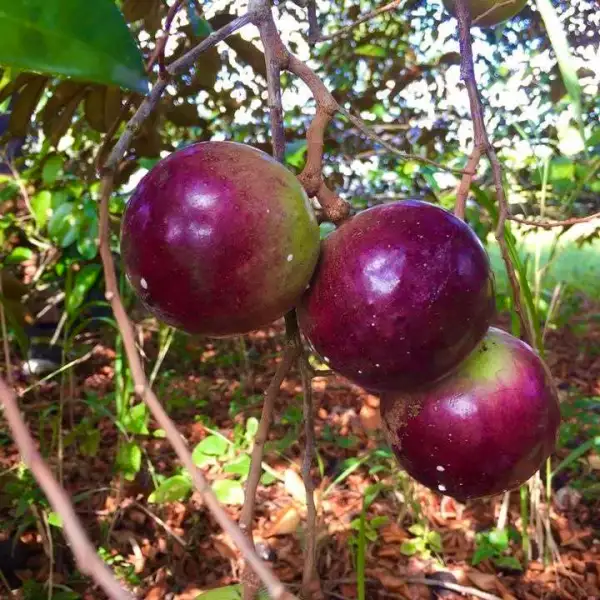
Fruit: The fruit of the Star Apple is round to oblate (slightly flattened), about 2-4 inches in diameter.
The fruit can have various skin colors, including green, purple, or a combination thereof. The purple-skinned varieties are more common. When ripe, the fruit has sweet, juicy, and aromatic flesh. The color of the flesh varies from white to pale purple. The pulp is gelatinous and may contain several seeds. The flavor is sweet and reminiscent of grape or pear, with a slight acidity depending on the variety.
Flowers: The Star Apple tree produces small, fragrant flowers that are pale green to white in color. The flowers are inconspicuous and typically bloom in clusters.
Cultural and Culinary Uses: The fruit of the Star Apple is eaten fresh, often scooped out with a spoon due to its soft, jelly-like texture. It is used in desserts, juices, jams, and ice creams in tropical regions where it is cultivated.
In some cultures, the latex from the tree is used as a chewing gum or to make rubber.
Climate: Star Apple trees thrive in tropical and subtropical climates with warm temperatures and high humidity.
Soil: They prefer well-drained, fertile soil but can tolerate a range of soil types.
Sunlight: They require full sun to produce abundant fruit but can tolerate partial shade.
Maintenance: Pruning is recommended to maintain the shape and health of the tree, as well as to facilitate fruit production.
Adequate watering and fertilization during the growing season help promote healthy growth and fruit development.
Harvesting: Star Apples are typically harvested when the fruit is fully ripe and begins to soften. The color of the fruit may change from green to purple as it ripens. Care should be taken not to bruise or damage the delicate skin of the fruit during harvesting.
The Star Apple plant is valued not only for its delicious and unique fruit but also for its ornamental value as a shade tree in tropical landscapes. Its sweet and aromatic fruit makes it a favorite in many culinary dishes and desserts across the regions where it is grown.
Reviews
There are no reviews yet.