


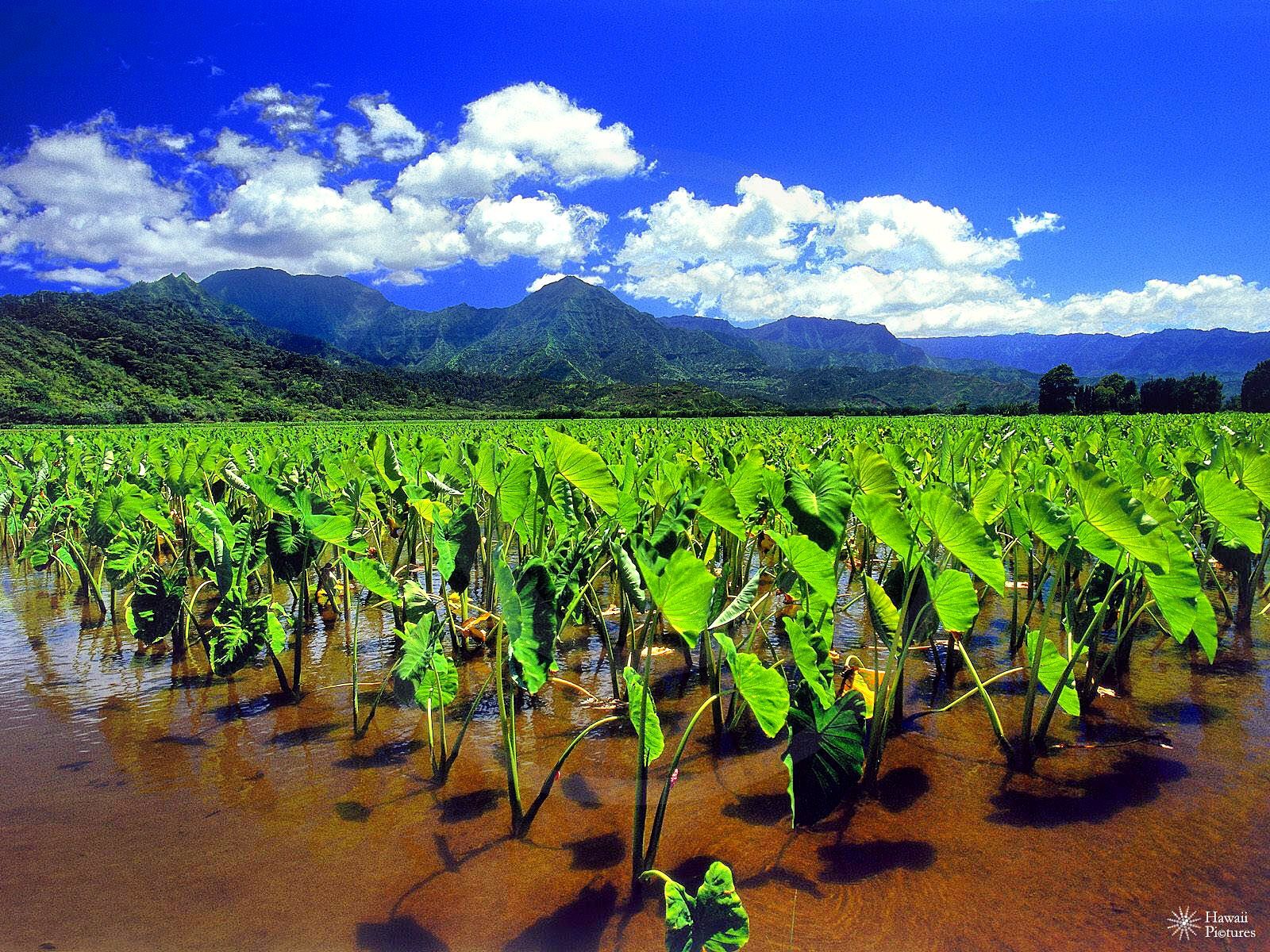

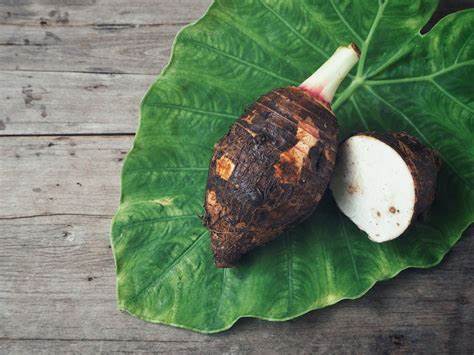


Kalo is the most important plant in Hawaiian culture. Kalo is the kinolau (form of god) of the god Kāne. Kalo was the first child of two Hawaiian gods and named Hāloanakalaukapalili. The second child, was the first Hawaiian man, and named Hāloa in honor of his older brother. When we take care of a kalo plant (our elder), kalo takes care of us (the descendants of the younger brother) by providing sustenance. The parent kalo plant (makua) have offspring (‘ohā) that sprout off the sides. ‘Ohana means “many ‘ohā”, or “family”.
There are two farming methods for kalo: wetland and dryland.
Wetland kalo takes great skill and engineering to establish.
“Ancient Hawaiians developed a sophisticated gravity-fed irrigation system based on the fundamental principle of working with nature and its natural forces, instead of against it,” writes Brittany P. Anderson in “The Past is Present: Kalo Farming on Hawaiʻi Island.”
Anderson describes how Native Hawaiians built loʻi (wetland kalo fields) next to fresh water sources with loose rock walls constructed around them, so that water could flow in and out. The cool, fresh water ensures the kalo corms do not rot, but instead stay fully hydrated and constantly replenished with nutrients.
A one-acre loʻi can produce three to five tons of kalo per year. During the harvesting process, the huli (cuttings) are replanted by plunging them back down into the muddy water. Eventually keiki plants grow around it creating an ʻohana. By continuing this process over and over again a loʻi can produce kalo for a lifetime.
Dryland kalo is planted into dry soil that is rich in nutrients and in areas that receive ample rain, and grows like other underground root vegetables such as onions, carrots and beets.
Botanical name: Colocasia esculenta
- Origin: Southern India and Southeast Asia
- Flowering date: Late Spring to early summer
- Sun Exposure: Full Sun
- Height: 3-6 feet
Planting Instructions: Taro grows best in tropical or subtropical climates. It requires warm temperatures (77°F to 95°F or 25°C to 35°C) and consistent moisture.
Taro corms can be planted in both dry and wet settings. In a dry setting, plant corms in furrows about 6 inches (15 cm) deep and cover them with 2 to 3 inches of soil. Space the plants 15 to 24 inches apart in rows about 40 inches apart.
Soil requirement: Plant it in rich, moist, well-drained soil with a pH between 5.5 and 6.5.
Water requirement: Taro plants need to be watered frequently, usually every few days. The specific amount of water depends on factors like soil type, temperature, and weather. As a general rule, aim for 4-6 inches of water per week.
Reviews
There are no reviews yet.